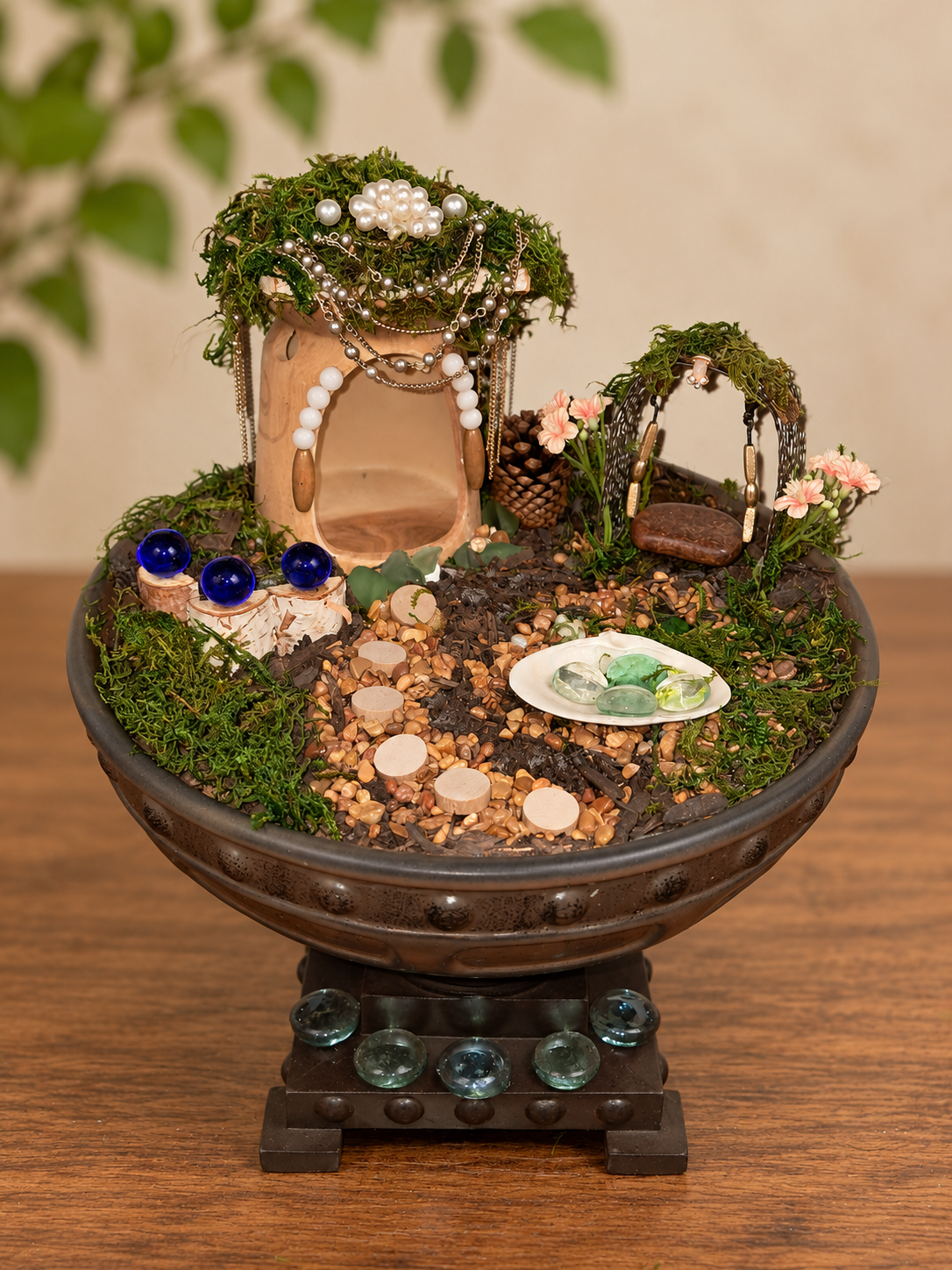
The right container does more than hold a scene. It gives the tiny world its shape, scale, and sense of permanence.
The evolution
One bowl, several chapters
The current version is shown above, with the pearl-draped house and flowered swing. These earlier stages show how the same thrifted bowl grew from an empty find into a world that can keep changing.
4 · The current chapter: the trellis became a swing, the house gained its pearl-and-chain roof, and miniature flowers brought new color—without closing the door on whatever the fairies collect next.
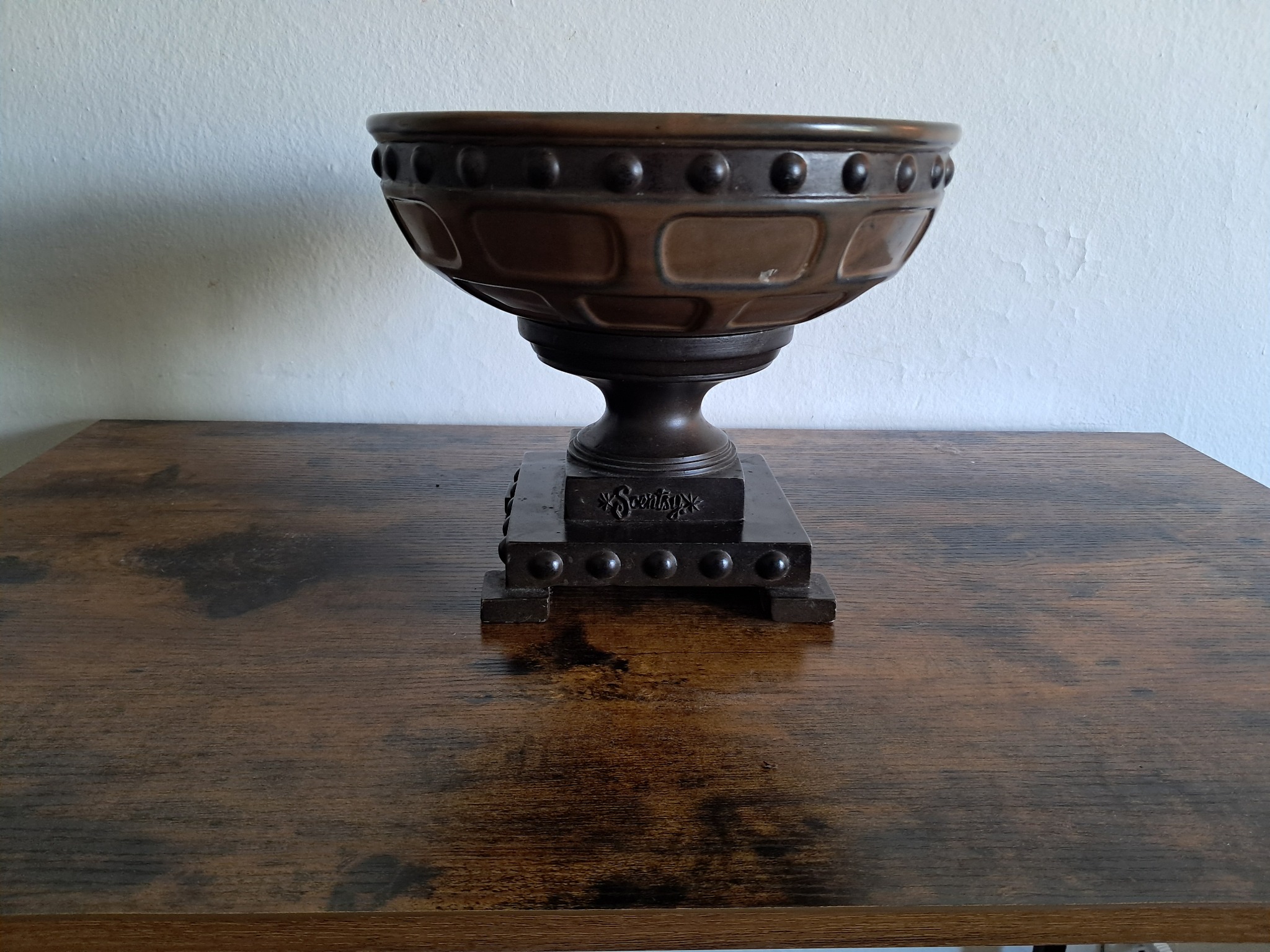
The find
This $7.99 pedestal bowl came from St. Vincent de Paul. It was chosen for its rustic detail, secure base, and useful proportions: 7 inches tall with a 10-inch opening.
The bowl was in good condition beneath the dust. Warm water and soap were enough to clean it before checking carefully for cracks, chips, and a secure base. Its depth leaves room for a firm foundation without making the scene difficult to reach.
- Thrifted pedestal bowl — $7.99
- 7 inches tall
- 10-inch opening
- Smallest practical size here for a home, path, and pond
The first version of the home
A $3 ceramic tea-light warmer from Goodwill became the main house. Its openings and clay-like surface already suggested a tiny home, so nothing was removed or reshaped. It was test-fitted in the cured foam while the surrounding landscape took shape.
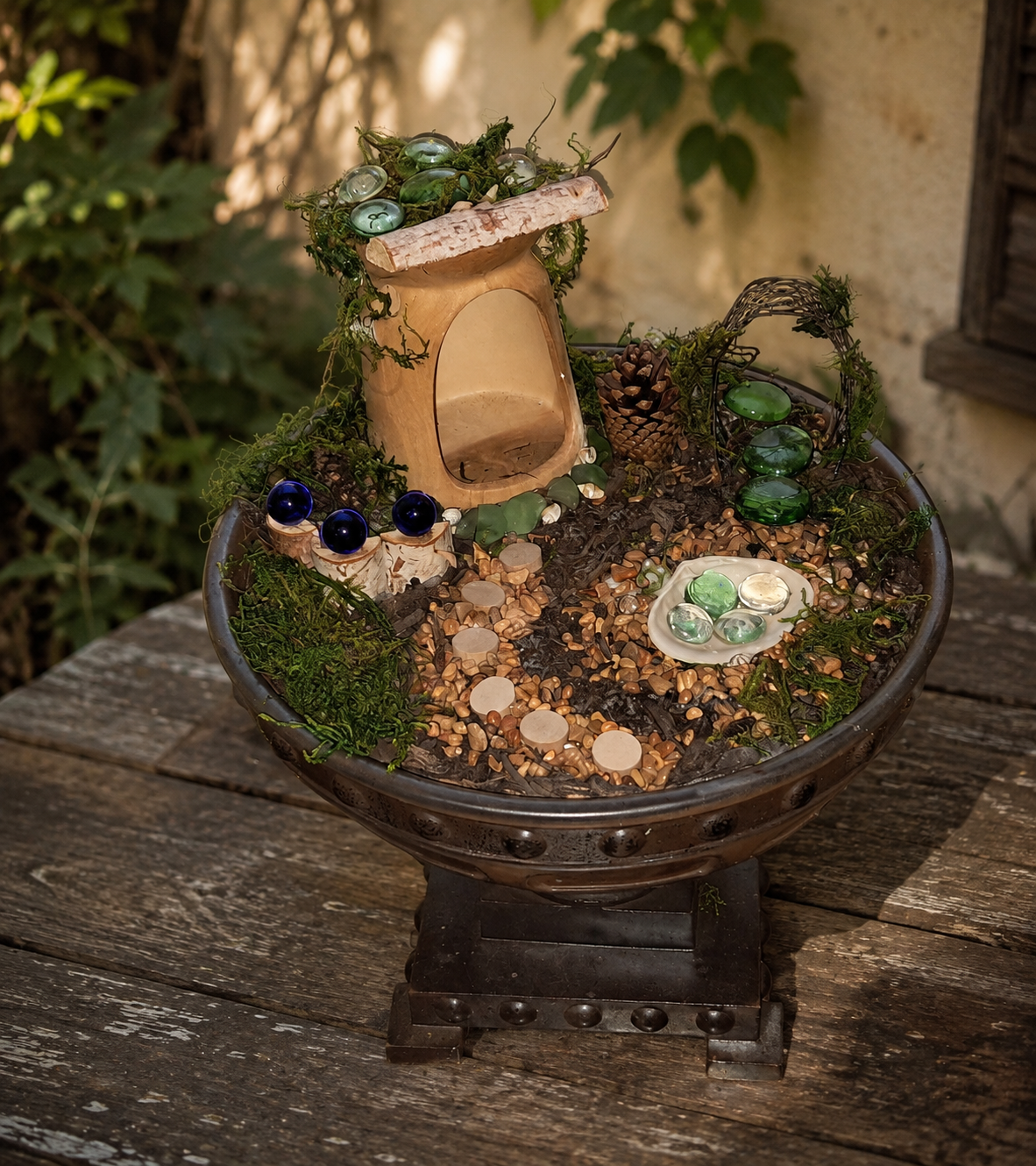
The first roof combined preserved moss, glass beads, and one birch half-log. That design was later replaced with thrifted pearl jewelry and trailing chains, while the birch piece remained concealed beneath the moss as support. The separate fairy-house guide follows that transformation.
- Metal ribbon trellis pressed into the foam
- Aquarium gravel path with wooden bingo-marker stepping stones
- Birch fence topped with three thrifted marbles
- Shell pond with glass beads suggesting water
- Pinecone, shells, and sea glass from a $5 thrifted vase
Why it is still evolving
Artificial miniature flowers will add durable color while real garden flowers grow around the bowl. A few newly thrifted jewelry pieces will become the fairies’ latest treasures.
A fairy world does not have to be frozen on the day it is made. Once the base and scene are established, found objects can create new layers over time. Thrift-first building leaves room for that slower kind of magic.