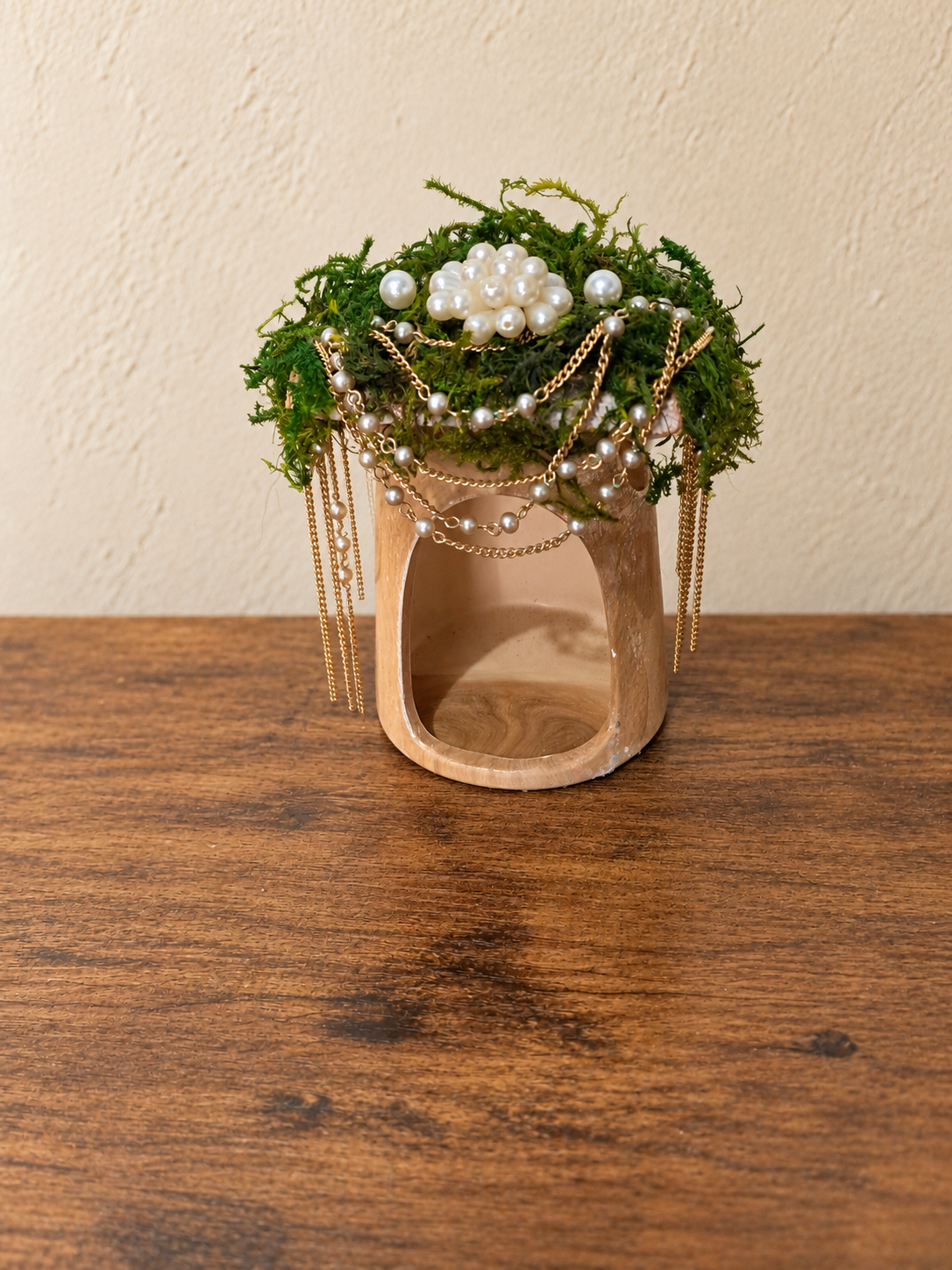
The best fairy houses are not always sold as fairy houses. Sometimes the doorway, shape, and character are already there—the original label simply asks to be forgotten.
The evolution
One thrifted warmer, four creative chapters
The design was not planned all at once. Each layer changed what the warmer could become, and the photographs preserve those decisions in sequence.

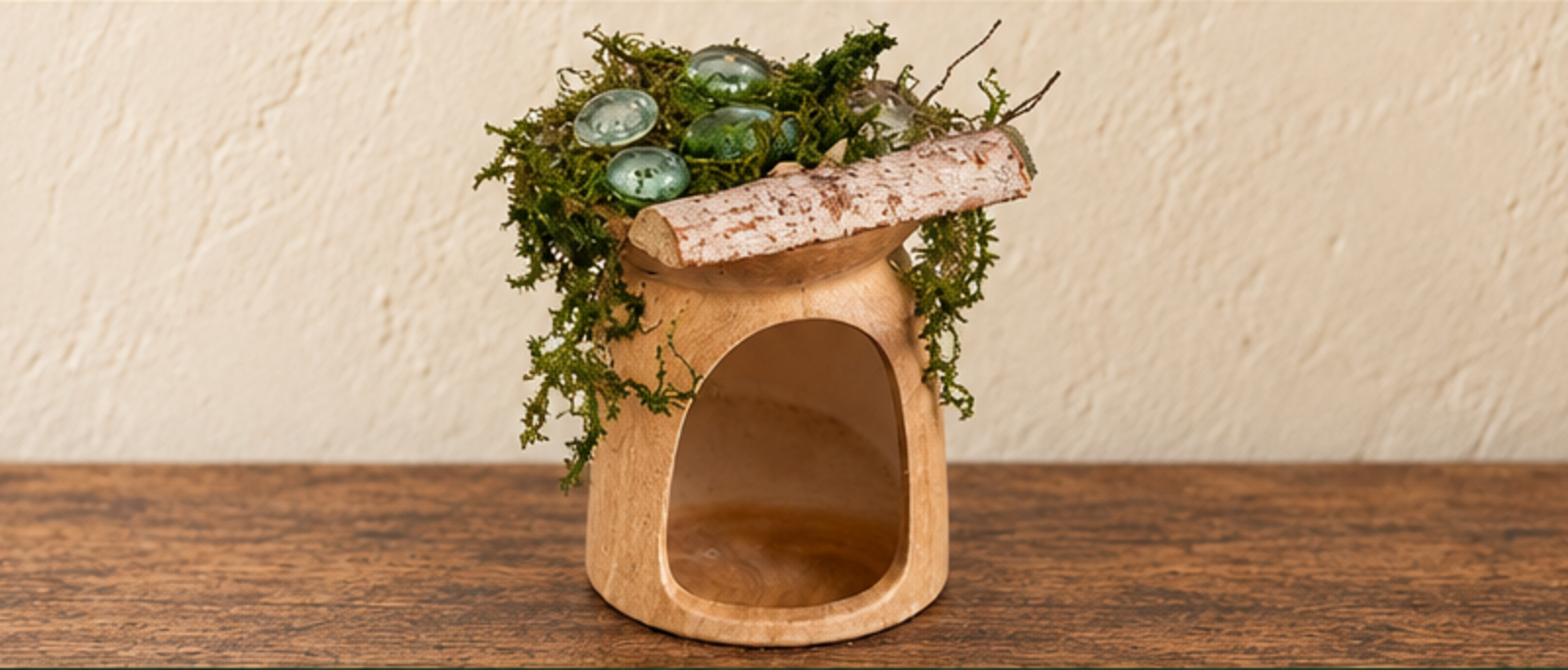
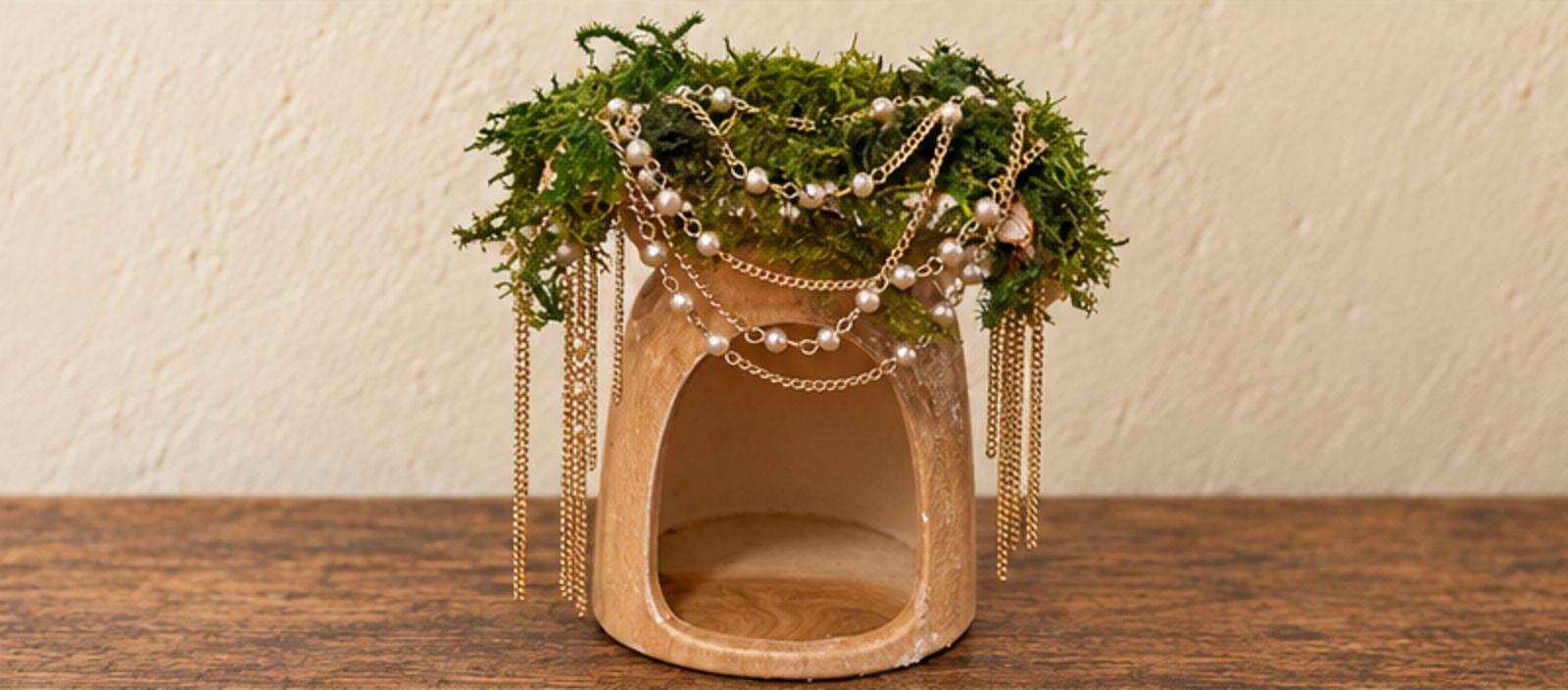
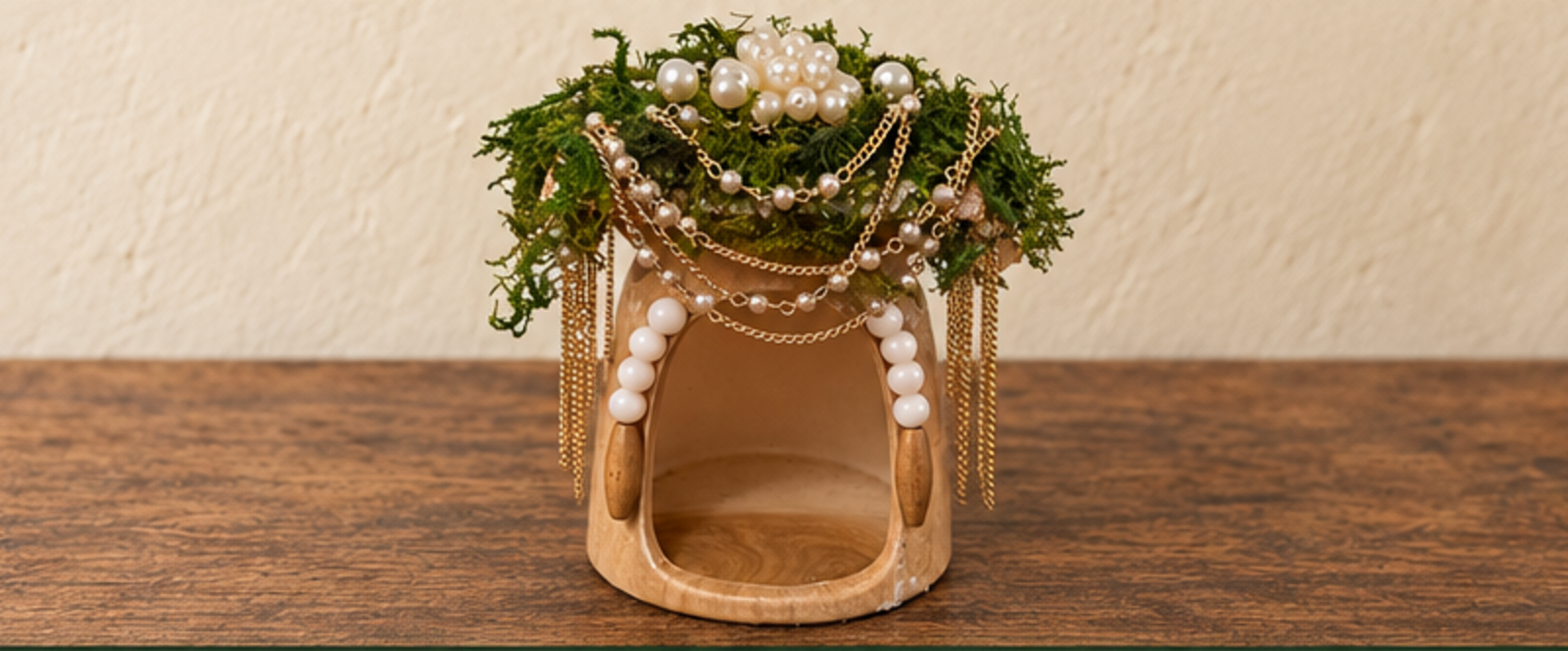
See the house before changing the object
This ceramic tea-light warmer was found at Goodwill for $3. It measures approximately 3.5 inches wide and 4.9 inches tall. The broad front opening looked like a ready-made doorway, the warm color suggested a small terracotta dwelling, and the shallow top offered a natural place to build a roof.
It was in excellent condition beneath a little dust. A fluffy craft paintbrush loosened the dust before the surface was wiped with a dry cloth. Water was avoided so the dust would not turn into muddy residue. Before repurposing any thrifted warmer, inspect it for cracks, chips, loose pieces, residue, and sharp edges. Once converted, this piece is permanently decorative and must never again hold a candle, flame, or other heat source.
Build the moss roof first
Decorating the house before permanently installing it makes the smaller decisions easier to see and change. Craft glue was applied around the edge of the top and swirled inward toward the center—not as a solid pool, but in enough coverage to hold a generous layer of preserved moss.
Once the glue had dried, a pick was used to fluff the moss and restore its volume. A piece of thrifted birch wood remained concealed along the front beneath the moss, where it provides hidden support for the jewelry draped across the roofline.
Turn thrifted jewelry into architecture
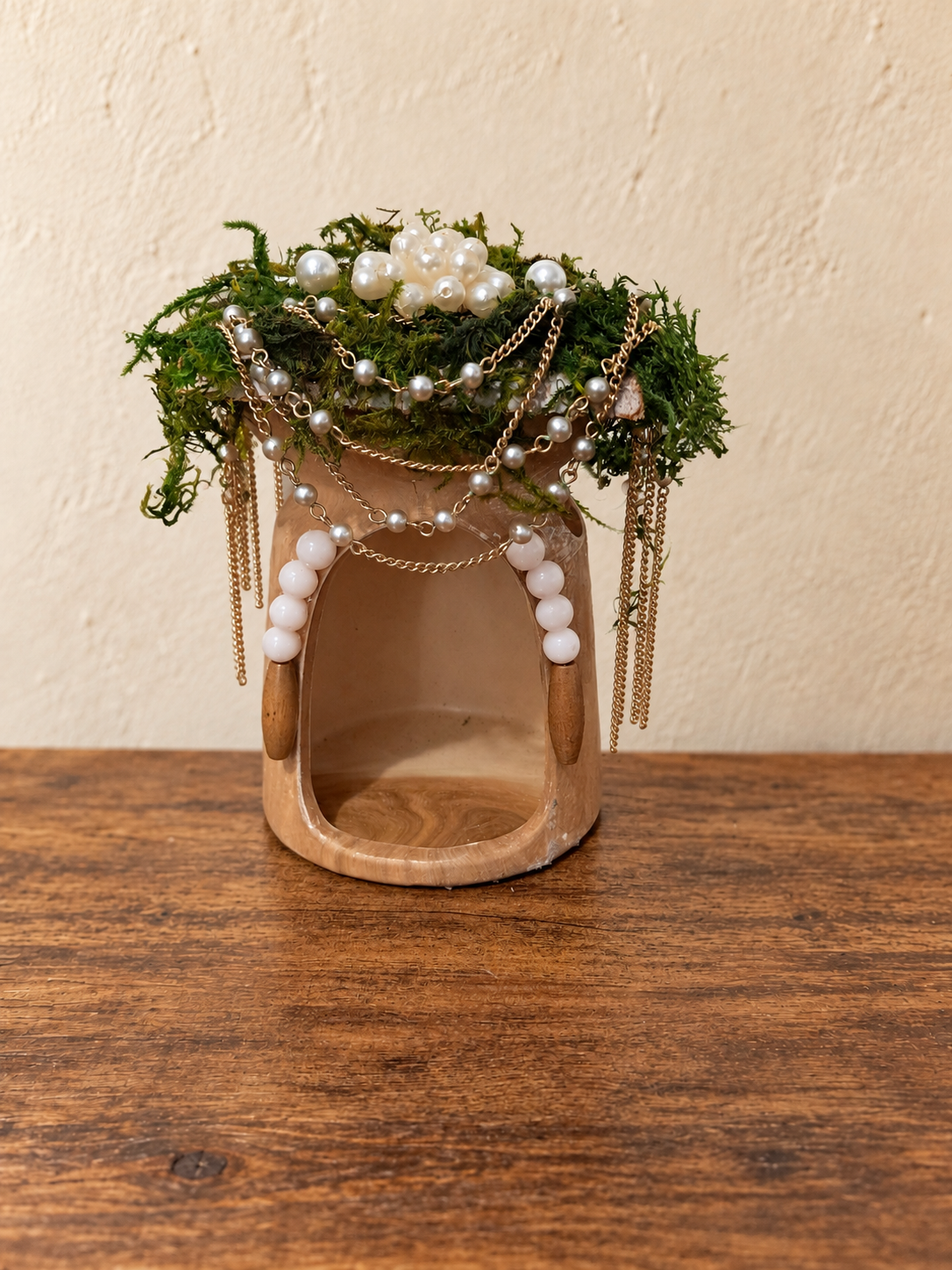
A four-layer gold-chain-and-pearl necklace from the thrifted jewelry jars became the roof garland. Its end connectors were removed by hand, the chains were aligned, and the necklace was draped across the front with the ends left hanging down both sides for movement.
The chains are fixed at only two concealed meeting points. Glue and moss fully surround the chains at those anchors, leaving the rest free to drape naturally. If a connector or backing does not release easily by hand, use small jewelry pliers instead of forcing it or risking a sharp break.
Frame the doorway and crown the roof
Beads from deconstructed jewelry were arranged around the doorway over a narrow line of craft glue. After the first bond dried, another thin line was added exactly where the outer edges of the beads meet the ceramic. This reinforces the contact points without burying the beadwork in adhesive.
Three separate pearl earrings form the roof’s center ornament. Their backs were removed, the posts were dipped in glue, and the posts were used like tiny stakes in the moss. Each post is completely buried so no sharp metal remains exposed.
Return the house to its world
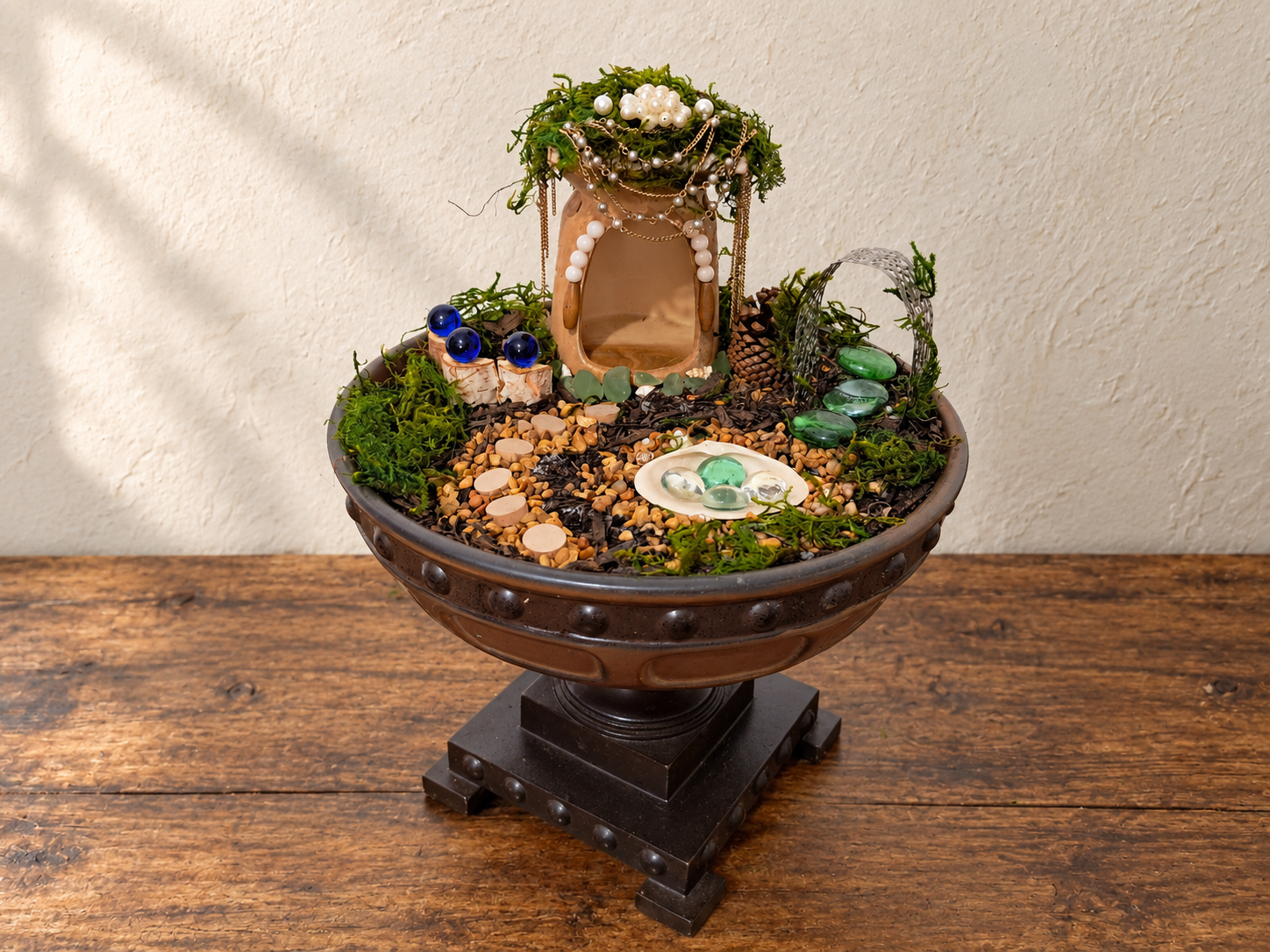
The original pedestal-bowl foundation already has a shallow round space carved into its fully cured foam. The decorated warmer can be seated there and permanently secured with craft glue around its base. Sea glass and small shells from a $5 thrifted vase will be glued around the final seam to connect the house visually to the path, pond, and surrounding landscape.
The doorway will remain open for now. It may eventually hold a light or gathered fairy treasure, but leaving that decision unfinished is intentional. These worlds are designed to evolve as new thrift finds suggest new possibilities.
What this small house really cost
The true foundation cost was $3. The moss, glue, birch wood, and jewelry came from shared supplies that will serve many projects, so charging their full purchase prices to this one house would exaggerate its cost.
For context, the preserved moss cost just under $4, the craft glue just under $5, two complete rolls of birch half-logs cost $2 total, and the jewelry came from three $31 bulk thrift jars. Only a small portion of each was used here. This is the practical advantage of collecting versatile materials: one purchase can become the roof, path, windows, water, trim, and treasure across several worlds.
Let it weather, but keep watching
The ceramic, moss, and jewelry were intentionally left unsealed so they can weather naturally. The glue began setting quickly, but the finished details were given several hours indoors before the house returned outside. Always follow the full curing directions for the exact adhesive being used.
Natural weathering is part of the artistic choice, not a promise of permanence. Unsealed metal may tarnish or rust, moss may fade, and bonds may weaken through rain, heat, wind, or freeze-thaw cycles. Inspect the house regularly, cover or move it during rough weather, and remove any piece that becomes loose or sharp.
There is no single right fairy house
The lesson is larger than this particular warmer: find beauty in overlooked things and remain open to what they could become. A doorway may begin as a tea-light opening. A necklace may become architecture. An earring may become a rooftop ornament.
Fairy-world building is art and imagination. The structure can be secure and thoughtfully made without the story being finished. Leave room for the world to collect its next layer.
The house returns to the original bowl
The close view shows the finished jewelry details. The full scene shows how the taller, more elaborate house changes the scale and character of the original world while leaving room for its next additions.