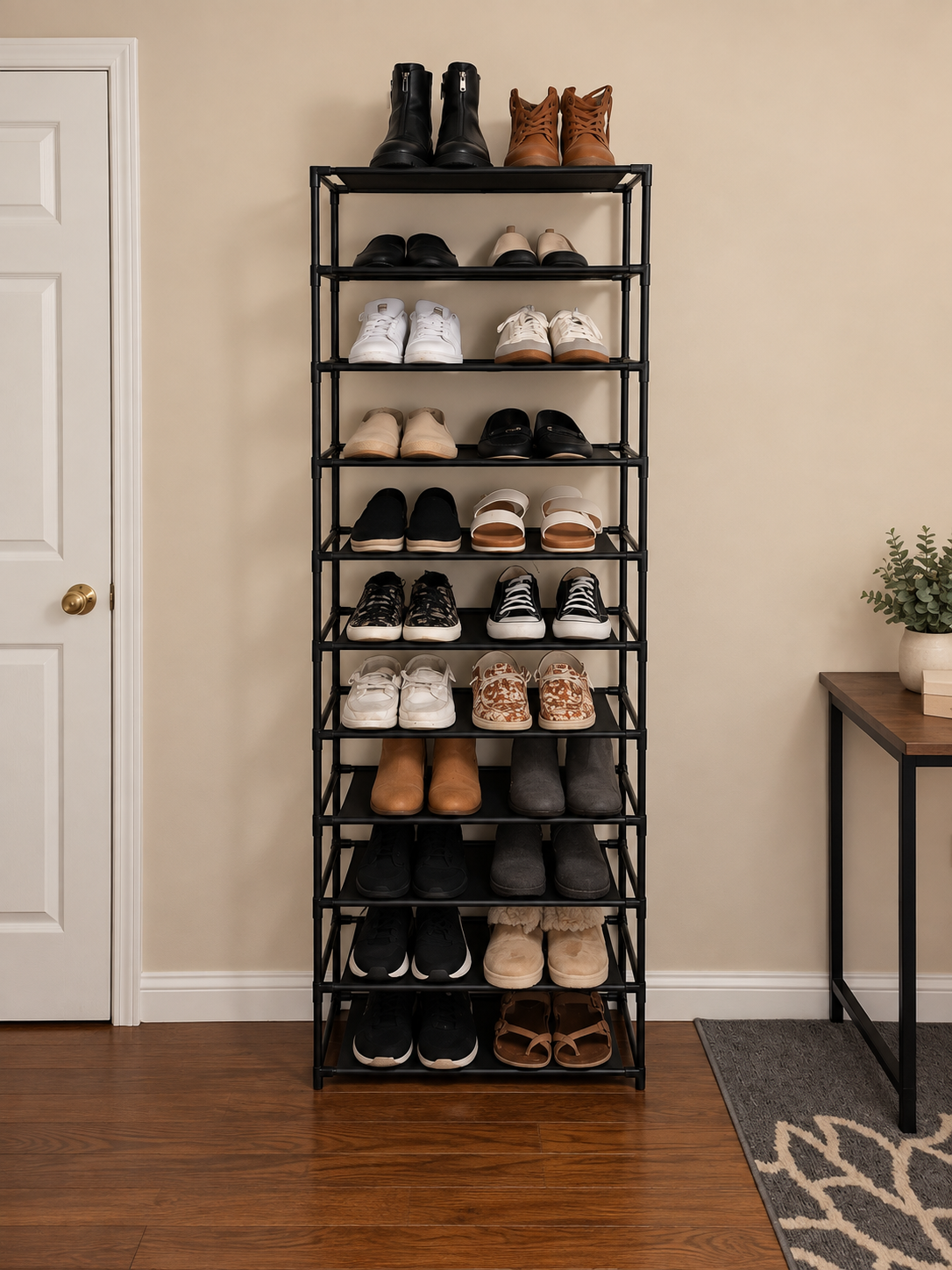
When storage is limited, the solution may not be another cabinet or a larger closet. A tall, narrow rack can use the room's height to organize more while occupying very little floor space.
Look for unused vertical space
An over-the-door shoe organizer had made the closet difficult to open, while a shelf on the closet floor consumed space needed for other belongings. Moving the shoes onto a freestanding vertical rack returned that valuable space to the closet.
This rack measures approximately 68 inches tall, 17 inches wide, and 10 inches deep. Its narrow footprint allows it to fit near an entrance, along a short wall, or in a corner. Before choosing a rack, measure around doors, vents, outlets, windows, and walking paths—not only the empty floor.
Place storage where it supports a habit
The rack currently sits a few feet from the bedroom door, making it convenient to put shoes away immediately after entering the room. Its lightweight construction also makes it easy to relocate when the room is rearranged.
The same principle applies to other uses. Handbags belong near the place where they are emptied or selected, toys near the play area, craft supplies near the work surface, and lightweight kitchen items near where they are used. Good organization shortens the distance between using something and returning it to its home.
Give every shelf a purpose
The rack currently holds 22 pairs of women's size-10 shoes, grouped by type. Slippers and slide sandals used around the house occupy the bottom level. Boots, Hey Dudes, Converse, slip-ons, and work flats stay with similar pairs, while wedges and thick-soled boots sit near the top. Long boots do not fit comfortably on the regular shelves, although the top may provide a possible place for them.
For another household, each level could hold a different category of handbags, toys, folded towels, yarn, craft materials, or lightweight kitchen supplies. Categories may be arranged by type, frequency of use, season, or household member. The exact order matters less than giving every shelf a clear job.
Match the contents to the rack
The manufacturer lists a maximum total weight capacity of 55 pounds. Weight should be distributed thoughtfully rather than concentrated on one level.
Avoid placing hot, wet, leaking, breakable, or excessively heavy items on nonwoven fabric shelves. Food and kitchen supplies should be clean, dry, securely packaged, and suitable for open storage. Homes with children or pets may also need additional placement or tip-prevention precautions. The rack should fit the objects rather than forcing unsuitable items into the space.
Keep the system easy to maintain
Wet or dirty shoes are left on a mat at the home's entrance until they are dry. This protects the fabric shelves and prevents outdoor dirt from spreading through the room. Loose debris can be removed with a dry brush, and the metal frame can be wiped with a microfiber cloth.
Assembly took approximately 20 minutes without separate tools. After almost a year of regular use, the fabric remains taut with no observed sagging or bending.
Create storage that can change with the home
The rack's current job is organizing shoes and freeing valuable closet space, but that does not have to be its permanent purpose. As storage needs change, the same rack could move to another room and organize a different collection.
A useful organizing product does more than solve today's clutter. It remains flexible enough to solve another problem later.